Brain Cancer: Turning the Terminal Into the Treatable

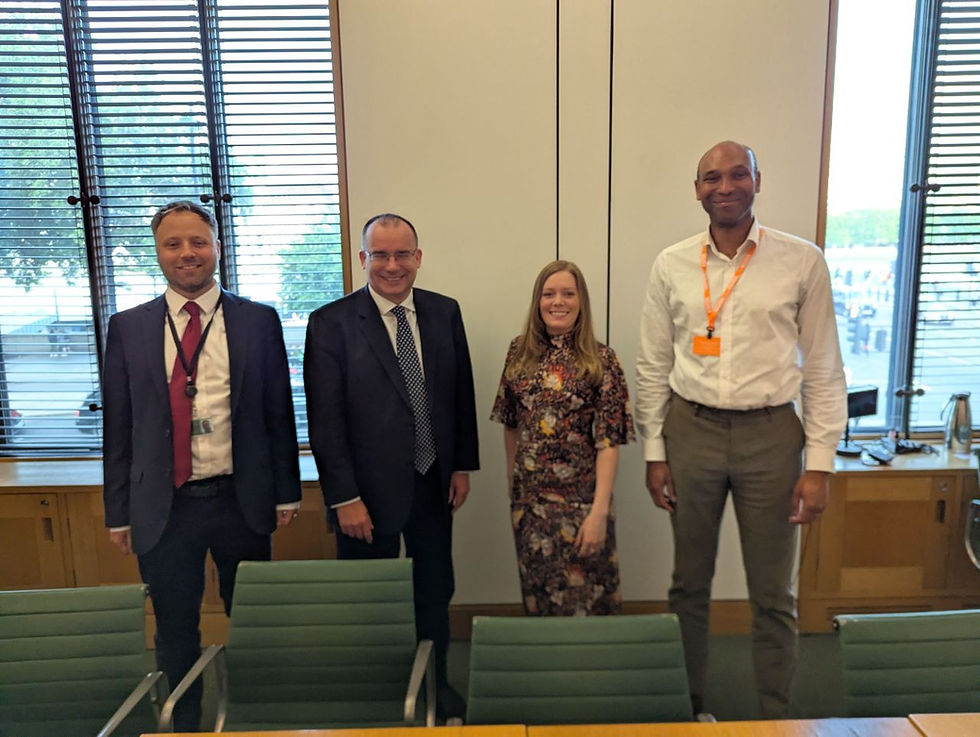
On Monday 15 June, I was invited to speak at a Parliamentary debate on brain tumour research and treatment by a constituent, Owen Sutton. The debate followed tireless campaigning from groups such as Brain Cancer Justice and The Brain Tumour Charity to secure more funding for research into novel brain cancer treatments.
Owen currently lives with a brain tumour and is an ambassador for The Brain Tumour Charity. I have met with him on numerous occasions to listen to his experiences and learn from his ideas for how we can improve outcomes for all people fighting brain cancer.
Owen was diagnosed with a brain tumour whilst at university and training for a marathon. Throughout his battle he has undergone surgery four times. During one of his operations, he suffered from a stroke which left him non-verbal and unable to walk. Through perseverance Owen regained both his mobility and ability to speak and has gone on to graduate and work in the tech sector. After losing friends to brain cancer, Owen now campaigns for all those affected by this terrible disease despite still living with a brain tumour himself.
We should all take inspiration from Owen’s strength, and channel that feeling into decisive action.
Stories like Owen’s are all too common across Britain. Every year, 13,000 people are diagnosed with a primary brain tumour, and 5,400 people lose their life from the disease. Amongst those with high-grade tumours just 13% of people survive beyond five years.
Lives cut short. Opportunities never had. Memories never made.
For patients, and their families, the consequences are life changing. A brain tumour diagnosis disrupts relationships, work and education. This is a traumatic ordeal which often leaves survivors with permanent mental scars.
In addition to these great personal costs, research from the Brain Tumour Charity has estimated that the long-term economic effects of low survival rates, losses of earnings and long-term care needs amount to an £18.7 billion burden felt by the economy and our NHS.
These great personal and economic costs reveal the true consequences of inaction. We need a strategy for long-term prevention, which prioritises groundbreaking research, early-stage diagnosis and patient autonomy.
In pursuit of this ambition, the Government has taken a series of promising steps. This February, the Government released the National Cancer Plan for England. It aims to harness genomic and lifestyle to inform a personal cancer plan for each patient and expand NHS participation in clinical trials. Additionally, the Rare Cancers Act has created a new National Speciality Lead for Rare Cancers to co-ordinate research and reduce barriers to life-changing innovation.
These reforms have been complemented by further funding from the National Brain Tumour Research Consortium, who announced a further £13.7 million to support research into new brain tumour treatments. I support these efforts to enhance UK-based research and expand access to life-changing treatments to all who need them through the NHS.
However, funding remains the core problem.
Currently, brain tumours account for just 3.2% of national cancer funding, despite being the biggest cancer killer for adults under-40. This funding shortfall has held back research and has contributed to workforce shortages across vital services. My colleague, Paul Davies MP, highlighted the impact of this on patient care, currently there is a 30% shortfall in radiologists and only 40% of patients have access to a clinical nurse specialist.
As of last year, only half of the Government’s £40 million of pledged funding for brain cancer research had been spent. The rest of this funding must be unlocked to ensure patients have access to the standard of care they deserve and adequate resources are set aside for vital research.
Through my work on the Business and Trade Select Committee I have seen firsthand the power of partnership in delivering powerful innovation. In Britain, we have world-leading research universities and life-sciences companies, the Government should play a catalysing role through co-ordinating their work with the NHS and civic organisation.
The transition from research to implementation should be made smoother by reducing the bureaucratic barriers faced by research institutions. We should build a Health Technology Assessment which acknowledges the long-term opportunities of new interventions alongside addressing the appropriate risks. Finally, participation in clinical trials must be expanded. Patient polling has found that less than half of respondents had been informed of clinical trial participation, with just 12% ultimately taking up the opportunity.
The National Cancer Strategy’s ambition is to make the NHS a first-choice venue for clinical trials. During the debate, Dame Siobhain McDonagh, who chairs the All-Party Parliamentary Group on Brain Tumours, powerfully highlighted the importance of clinical trials. She is supporting Margaret’s Trial, which thanks to thousands of donations and the work of talented researchers at University College Hospital is looking into how immunotherapy before surgery can help newly diagnosed glioblastoma patients. Trials such as this allow patients to access vital, cutting-edge treatments and inform future research into how those treatments can be made available to more people.
Given the huge benefits of trials, more information about participation should be provided to patients through an enshrined ‘Right to Try’. This is a proposal Brain Cancer Justice have strongly campaigned for, and it was one of the focuses of my debate last Monday. A ‘Right to Try’ would increase patient choice and widen participation to ensure the findings from clinical trials more accurately represent the population.
The Parliamentary Under-Secretary of State for Public Health and Prevention, Sharon Hodgson MP, attended the debate and was receptive to the arguments of my colleagues and I. She re-asserted the Government’s commitment to implementing the Rare Cancers Act in full, with further direction and funding for research alongside widened recruitment for clinical trials. I support the Government’s position on this, it now time turn this sentiment into concrete action for patients.
In keeping with the universal values of our NHS, all those affected by brain cancer deserve access to world leading treatments regardless of their background. Looking to the future, we must all carry the strength and inspiration of Owen’s story, to choose “hope over fear” and turn the terminal into the treatable.